How to Have a Successful Haunt
By Asianna Madsen
You’ve come up with some great ideas for a haunt, and now you’re wondering how to turn your dream into a reality. Haunts are fun, spooky, thrilling, and terrifying, but building a haunt from scratch can also be a bit scary. Don’t worry though. With the right plan, your haunt can be a huge hit this next spooky season. We have some tips to make your haunt a success.
Part of Our Series:
Create a Good Budget
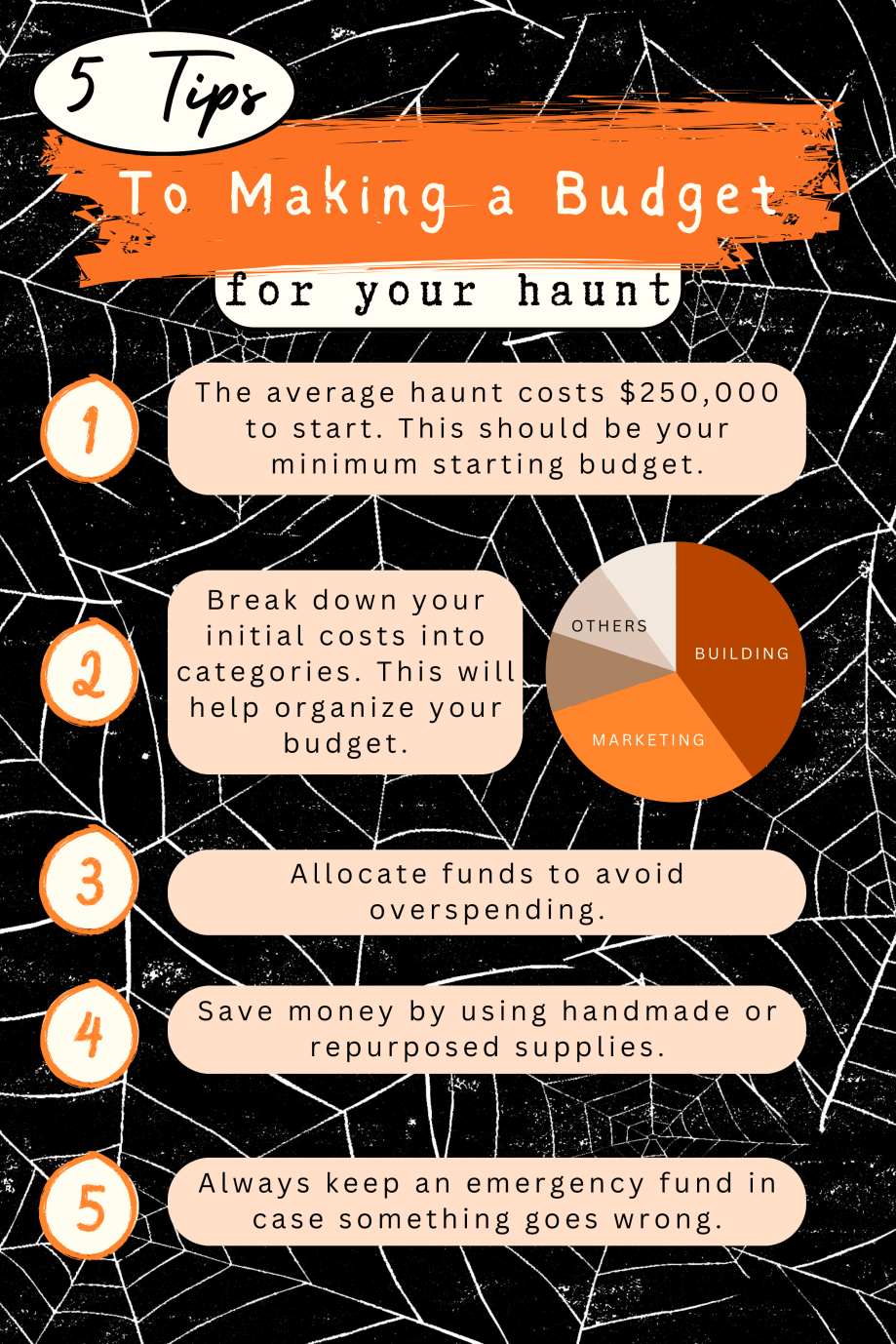
One of the most important factors to a successful haunt is your budget. Many haunts fail because they don’t make enough profit in the first year. However, this can be avoided by starting with a good budget.
Plan Initial Costs
The first step to making an event budget is planning your initial costs. This will tell you how much money you need to raise in order to build your haunt.
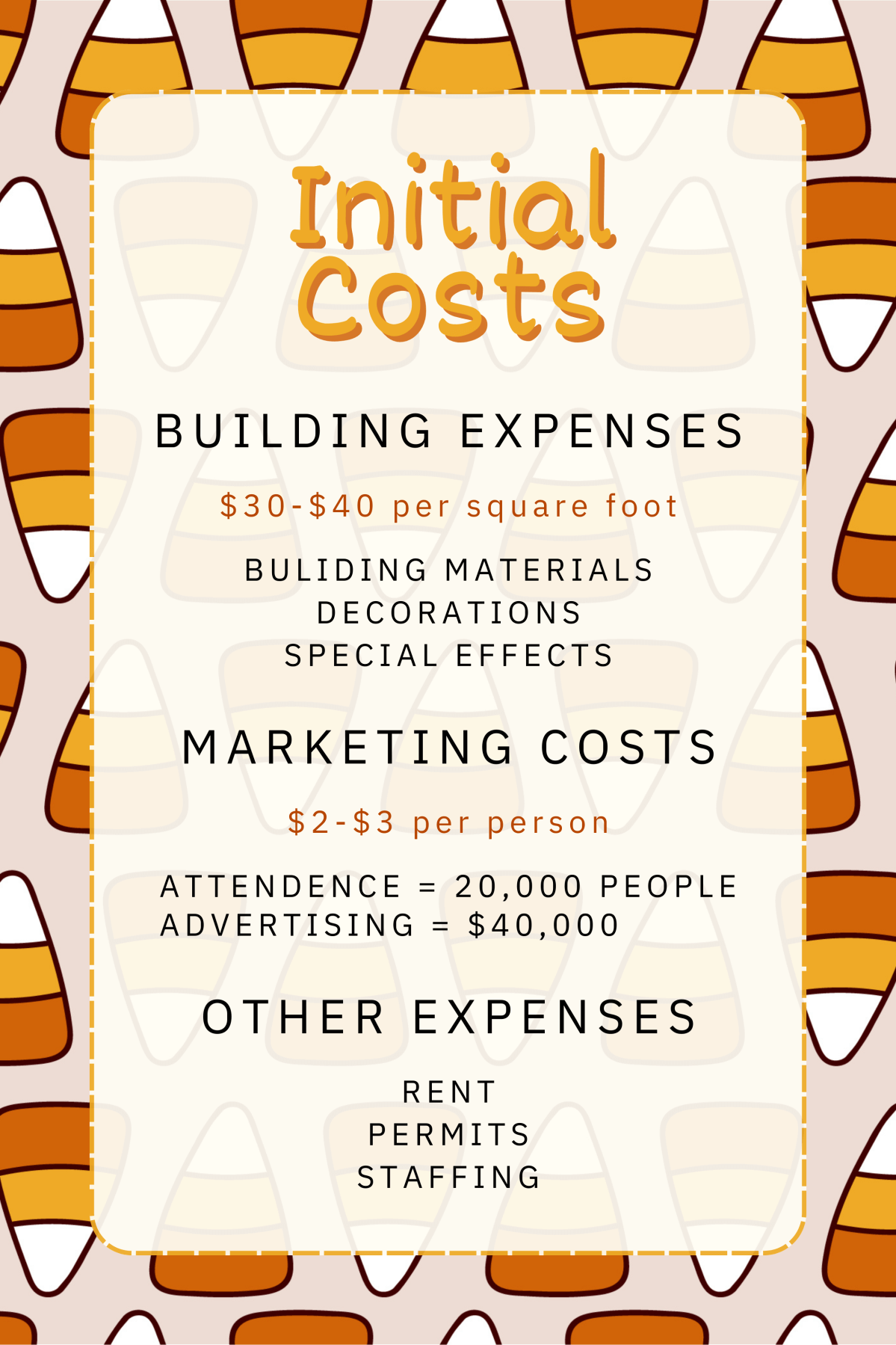
The average cost to start a haunt is $250,000, so this is the minimum you should plan to spend on initial costs. This includes paying for building, marketing, permits, rent, and staff.
One of your main initial costs will be building expenses. Most haunts spend $30-$40 per square foot. Once you know how much space is available to you, you can use this to calculate your building costs.
You also need to calculate marketing expenses. As a general rule, plan to spend at least $2-3 per person who comes to your haunt. This means that for a target attendance of 20,000 people, you should spend at least $40,000 in advertising.
Calculate how much money you’ll need to rent your building space, pay for building permits, and hire your staff. You need to make sure you have enough funds to cover all of your initial costs.
Allocate Funds
Next, you need to allocate your funds so that you don’t overspend. Your initial costs will determine how much money you budget for each expense.
It’s tempting to splurge on cool props and costumes, but then you won’t have enough to pay for permits or hire actors. Allocating your funds is the best way to avoid spending too much money in any category. This also helps you know where you need to save on low-cost options, and where you can spend a bit more on higher quality supplies.
Save Money When You Can
A good way to save on money is to make some of your decorations and costumes yourself. You don’t want your haunt to look cheap, but you also need to stick to your budget. There’s a lot you can do with some thrift items and a little bit of creativity. You shouldn’t need to blow your budget in order to have cool, spooky props.
One way to balance high quality with a low budget is to combine professional and homemade props. You can buy high-quality equipment for your most important props and special effects, and pinch pennies on your other decorations.
Keep an Emergency Fund
You also need to keep some of your funds in reserve for unexpected expenses. No matter how well-prepared you are, you can’t plan for every possible situation. You never know when bad weather, an accident, or an unexpected fee is going to cost you some extra money. If something goes wrong, you need to be able to handle it and still cover the rest of your bills.
Get Insurance
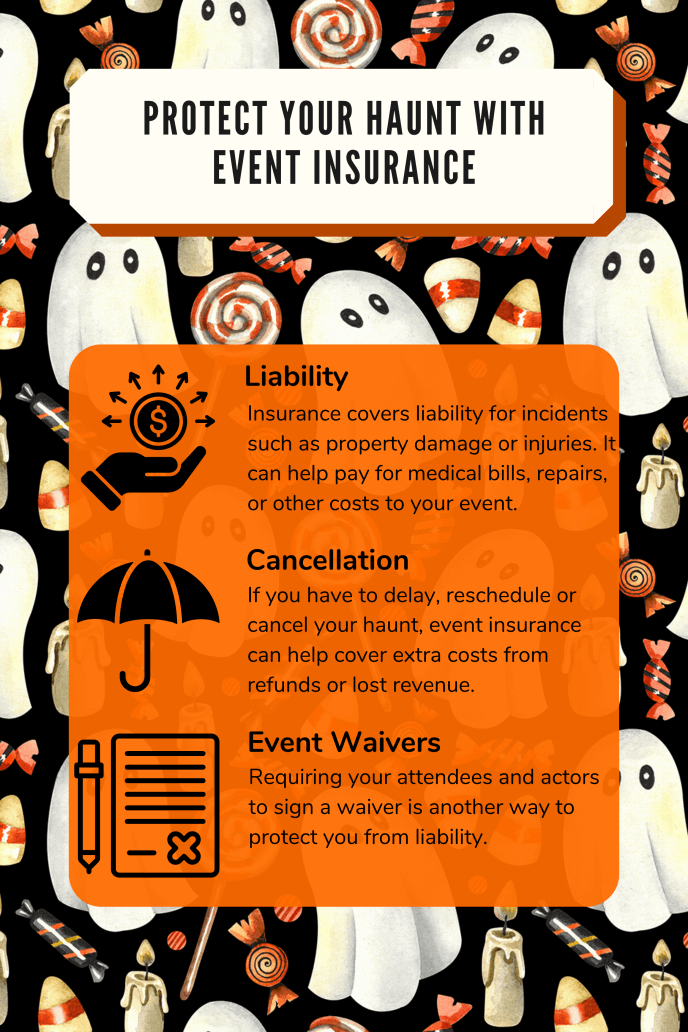
Ideally, you’ll never need to use your insurance, but it’s best to be prepared. Even the best haunts can end up going bankrupt if they are not legally protected. Event insurance helps to cover any unexpected costs from legal concerns and protect you from liability.
Liability
Event insurance can cover liability for injuries or property damage. For example, if one of your guests or workers gets injured or breaks something in your haunt, insurance can help cover the medical bills or repairs.
You can’t control everything that happens during your haunt, and even a minor incident can become a huge problem for your success. Even if the situation isn’t your fault, you need to be able to prove that you’re not liable. Insurance is an important part of making your haunt successful.
Cancellation
Insurance can also help cover expenses if you have to delay, reschedule or cancel your haunt.
Event Waivers
In addition to insurance, you also need event waivers. Require your attendees to sign a waiver before they purchase their tickets. Make sure they acknowledge the potential risks of your haunt, and agree to your refund policy or any other terms and conditions that you have. You should include warnings about certain effects such as strobe lights, jump scares, dark spaces, or fog.
You never know when something might go wrong, so it’s best to cover all of your legal bases. Informing your guests about what to expect and having insurance to cover your back are the best ways to prepare for unforeseen problems.
Find a Suitable Location
Before you can start a haunt, you need somewhere to set it up. Some haunts are permanent attractions, while others are pop-up events that only stay during the season. Where you build depends on whether your haunt will be up for several years, or only for a couple of months.
Pop-up Haunts
Building a pop-up attraction can help you save money because you won’t have to find space for the whole year. This could make it easier to find an available location, and you’ll only need to rent it for a couple of months. However, you will have to put up and take down your entire haunt every season, which takes some extra time and work.
Permanent Haunts
A permanent haunt is a good option if you plan to be in the haunt business for several years. It’s also a good choice if your haunt will be too difficult to take down immediately. However, this means finding a location that you can buy or rent long term. You should also consider what you’ll do with the space during the off-season. Is your haunt going to sit there until you open again next year? Or do you plan to use it year-round?
Space and Accessibility
Once you have a plan, you’ll need to look for a venue that has enough space for your haunt. The location you choose also needs to be affordable for you to rent or buy. You should consider how convenient the location is for your patrons to find, and whether people will be able to park nearby. A central venue with accessible roads and parking will attract more customers to your haunt.
A good way to save on some of your upfront costs is to partner with local businesses or venue owners. Some venues may be willing to let you use their space for a percentage of your profits or a partnership agreement.
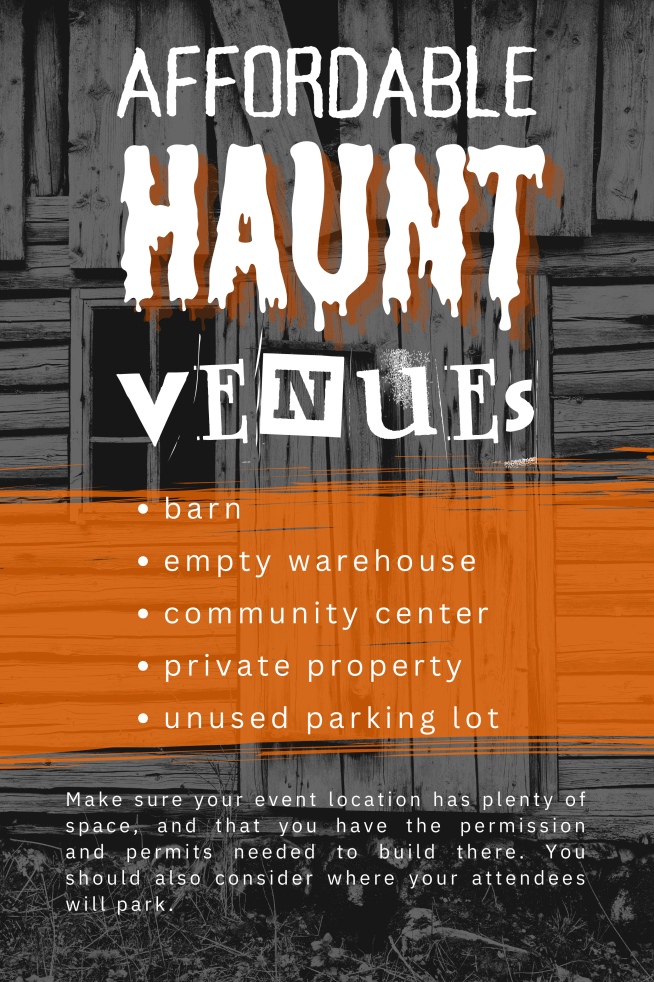
The venue you choose will depend on what’s available in your area, but consider some of these common, affordable venues:
-
Barns
-
Empty warehouse
-
Community Centers
-
Private property with a large amount of space.
-
Unused parking lots
Know Your Target Audience
Knowing who you want to attract to your haunt makes a big difference in how you design it. Are you designing a haunt for families with younger kids? Are you looking for thrill-seeking teens looking for a spooky night? Or do you want to attract the hardcore haunt goers, looking for a seriously frightful experience?
It’s important to have a target audience for your scares. Different age groups are going to enjoy different intensities of scares. You’ll need to design both your scares and your themes to match your audience.
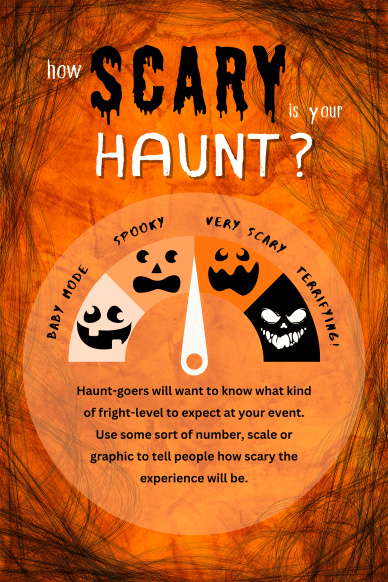
You also need to make it clear to your patrons what kind of scare-level they can expect at your haunt. Is it going to be an easy-going experience, or the thrill of their life? Your attendees will want to know what to expect at your haunt.
Try using a meter or rating system to tell your customers how scary your haunt is. For example, a 1 out of 5 intensity might be suitable for children, but a level 5 intensity is going to scare even the avid horror fans. This is a simple way to communicate the intensity of your haunt to your customers.
Hire Enthusiastic Actors
If you want people to be scared at your haunt, you’ll need talented actors.
Hire aspiring actors
You’ll want to look for people in your community who are passionate about acting or have experience with haunts. These could be members of drama departments or local high school and college students. Many of these aspiring actors will be the best candidates because they are skilled, enthusiastic, and will appreciate the extra gig.
Spread the word ahead of time
To find your actors, you can post job listings online, or go in person to local acting groups to spread the word. Make sure you give them information about your haunt and tell them how to apply. And most importantly, show how passionate you are about making a great haunt. The more excited your actors are about your haunt, the better the scares will be. You should start this process several months before you open the haunt.
Hold Auditions
Depending on how many applicants you get, you might want to consider holding auditions to find the best actors for your haunt. These auditions could be as simple as having them show you their best zombie walk, or having them prepare a skit to show their skills.
Train your actors to scare
Once you’ve selected a team of actors, you’ll need to train them to deliver safe and consistent scares. You’ll need to instruct them on what level of intensity their scares should be, determined by your target audience.
It’s also important that your actors understand basic safety guidelines, such as how close they are allowed to get to your guests, how to prevent injuries, and what to do in case of an accident.
Hold rehearsals
Hold rehearsals before opening your haunt so that your actors can practice hiding, scaring, and staying in character. You could even hold a dress rehearsal before opening night and invite friends and families to do a test run. This way, you and your actors can see how effective their scares are and make adjustments before your attendees arrive.
Enforce Safety guidelines
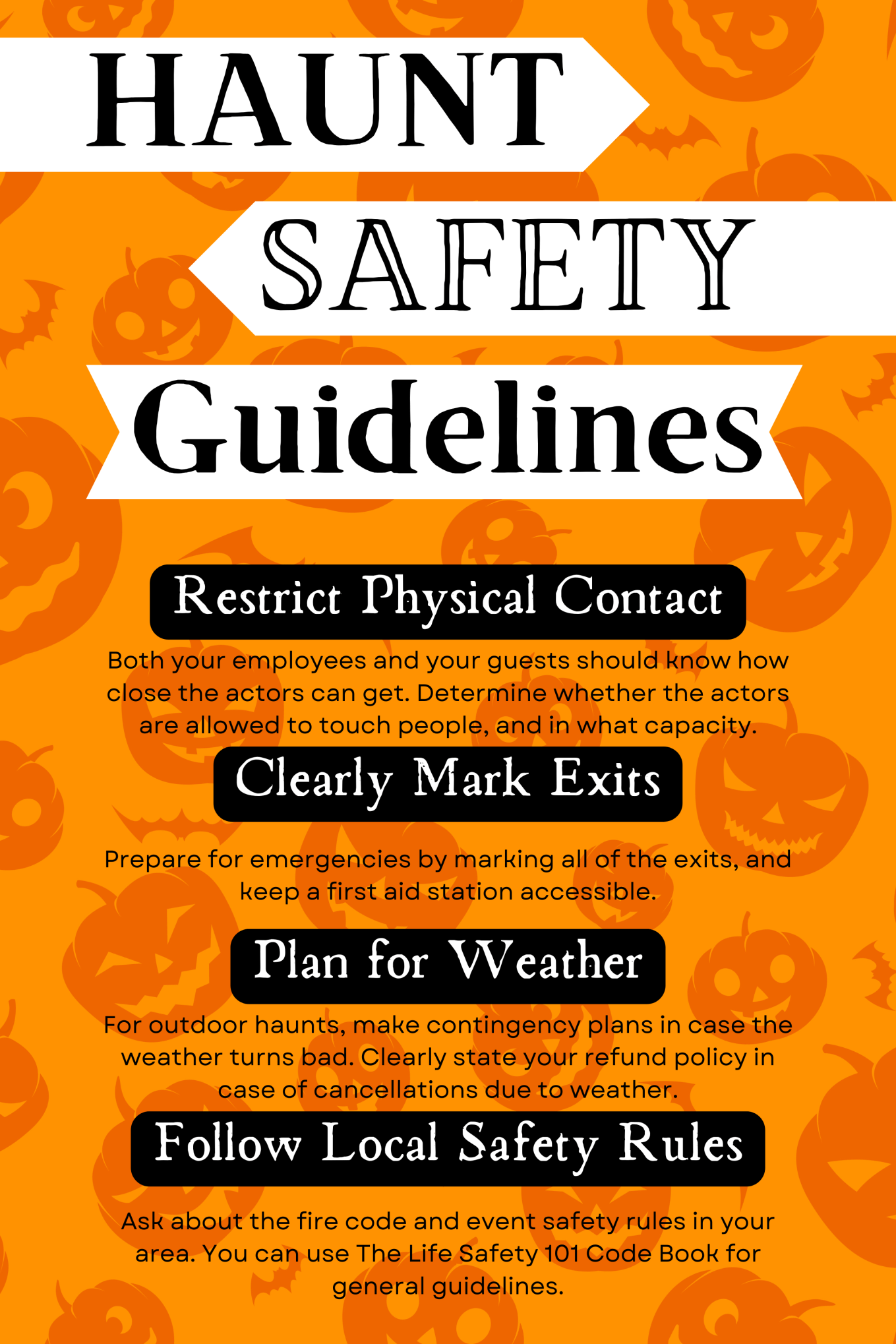
The safety of your patrons and your staff are vital, so it’s important to have a good set of safety guidelines.
Physical contact guidelines
Make sure your actors know how close they can get to your guests, and whether or not they are allowed to touch them in any capacity. Make sure your haunt-goers are aware of and understand these rules.
Your attendees also need to be reminded not to touch or attack the actors. We’ve all heard horror stories about haunt actors getting injured by a scared attendee, and you want to prevent this happening at your haunt. You should have both your actors and your attendees sign waivers in case there are any accidents.
Mark the exits
Plan for emergencies by clearly marking exits. You should have a first aid station, and if your event is large enough, you might even need security personnel.
Plan for weather
If your haunt is outdoors, you’ll need to prepare for unexpected weather. Make contingency plans in case of bad weather, or have a strategy in place if you need to cancel your event. This includes informing your attendees about your refund policy. It should be clear in your waiver form whether or not you will offer refunds in case of cancellation, or if people can exchange their unused tickets for a different night.
Follow local safety guidelines
Depending on your haunt location, there will be different fire codes and safety guidelines that you need to follow. Make sure you have the right permits to build your haunt in your city and find out what safety codes you need to follow so your haunt doesn’t get shut down.
The Life Safety 101 Code Book has a section on Special Amusement Attractions. Make sure that your haunt is in line with these guidelines and any other rules that your city or area may have for special events.
Creating a successful haunt requires careful planning, strategic budgeting, and a focus on safety and audience engagement. Ultimately, attention to detail in both the creative and logistical aspects will not only enhance the guest experience but also help ensure the long-term success of your haunt. With the right combination of preparation and passion, you can create an unforgettable, spine-chilling experience that keeps visitors coming back year after year.