How to Organize an Event
When you organize an event, you’re investing in your community. You’re giving people opportunities to be with friends and family to do something fun. You’re giving local businesses opportunities to connect and grow their businesses.
As you’re starting to create your event, use our guide with 8 steps for the event planning process. You'll be prepared for success as an event organizer with everything you need to know about how to create an event.
- Clarify Your Purpose
- Choose Your Event
- Select Event Management Software
- Identify Target Audience & Develop a Marketing Plan
- Create an Event Budget
- Gather Funding
- Get Permits
- Recruit Volunteers

1. Clarify Your Purpose
Start by understanding what your primary objectives are with your event. Perhaps you’re creating an event as a business opportunity – whether it’s its own business or a way for you to draw attention to your store to increase sales.
Maybe you’re creating a charity event to fundraise for your nonprofit, charity, museum, sports program…etc. Or, even just for a community member in need. Events are a great way to draw people together and gather support for your cause.
Or, you’re trying to find ways to connect your community. And, nothing brings people together more than food and fun.
Whatever your event goal is, it will shape your event planning and determine how you measure your event’s success. If you’re trying to organize events as a business, you’ll want to measure your success by profitability. Keep in mind that events are often not profitable in their first year, so you’ll want to run your event for at least two years to assess profitability.
If you’re organizing an event to boost sales at your business, then you’ll want to measure your success based on how much sales increased on your event day.
2. Choose Your Event
- Galas
- Haunts
- Rodeos
- Festivals
- Car Shows
- Corn Mazes
- Tournaments
- Christmas Lights
- Theater Productions
- Conventions (Anime, Lego, etc.)
- Professional Conferences & Tradeshows
- Endurance Events (5ks, fun runs, mud runs, etc.)


As you determine what kind of event you want to do, consider the following.
- Seasonality - Is your event tied to a specific season or holiday? Or, can it be repeated a few times throughout the year?
- Competition - What other events happen near you? How big are they? Is there a gap in these event offerings?
- Cost - How much will it cost to put on your event?
- Your Interests - What makes you excited about putting on the event? (It might be hard to organize a successful Anime convention if you’re not passionate about Anime, for example.)
You can also consider organizing a virtual event or a hybrid event. These types of events can expand your audience beyond your local crowds. However, you'll need to find ways to create a sense of community and ensure attendee engagement with your virtual audience.
Once you’ve settled on the kind of event you're organizing and your event date, it’s time to get to work on your planning process.
3. Identify Target Audience & Develop a Marketing Plan
Before you start planning and marketing your event, you need to have a clear picture of who your target audience is. While it’s tempting to try to cater your event to everyone, that strategy often backfires because you end up with a generic event with generic marketing that appeals to no one.
Start by understanding some basic demographics of who your potential attendees are. The questions below can help you have a clearer idea of your audience. And, some of the questions may not be relevant to your event.
- How old are they?
- Do they have any kids?
- Are they married or single?
- What's their income?
- What are their hobbies and interests?

Once you have a sense of who your audience is, ask yourself what they’re looking for from an event. Make sure you include these items as you plan your event and develop the attendee experience.
You’ll also use the information you have on your target audience to develop your event promotion plan, messaging, and even your event name and event branding. Develop some messaging around your event. Consider what words, images, and videos will resonate with your audience. You’ll also want to factor in what your key attractions and experience deliverables are and include those event details in your advertising and on your event website.
Once you’ve settled on some talking points, think about how your target audience learns about events and use those methods to get your message out. Check out our top event marketing tips.
Get Started Today
4. Select Event Marketing Software
Next, you’ll want to look into event marketing software because it will help you grow your audience and sell more tickets and event registration.
You’ve got a lot of options when it comes to event software. Some companies specialize in event management, some ticketing, some registration, and others also focus on event growth.
Most event software is free because the company charges a service fee on each credit card transaction. Your attendees and participants pay this fee, so you never have to pay anything.
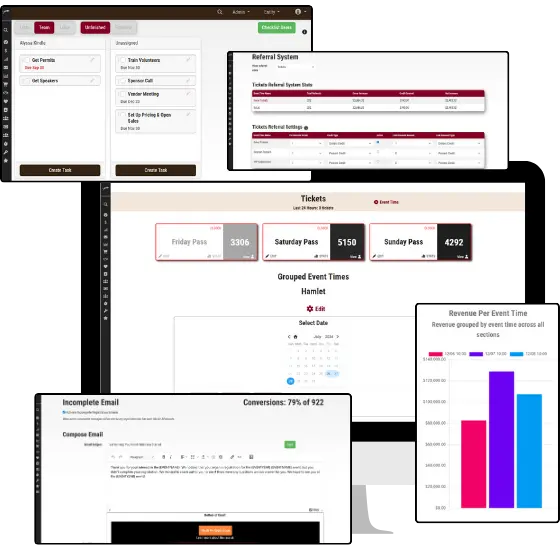
Stride Events is an all-inclusive, free event software. It specializes in growing events. And, it offers event management tools to help you plan and analyze your event.
Stride Events' event creation form is quick and easy. You'll get a customizable event page to market your event – customize it with your event title, photos, video, event location, and an event description. You'll also automatically get an event link on our upcoming events calendar.
Our growth tools include
- Referral Program - Offer rebates for every friend and family member your attendees get to buy tickets.
- Abandoned Cart Emails - Close more sales with automated abandoned cart emails.
- Share & Save - Offer a $1-2 discount for everyone who shares your marketing page with their friends on Facebook.
Our event management tools include
- Checklist - Create and assign tasks for yourself or team to make sure everything gets done.
- Budget & Revenue - Review your spending and revenue generation to better understand your profitability.
- Sponsor & Contractor CRM - Track your conversations with prospective contractors and sponsors to help you close more deals.
We’ve got even more tools – like fundraising – that will make your job easier and help your event be a success. Learn more about how event organizers benefit from Stride Events.

5. Create a Budget
To put on a successful event, you need to develop and stick to a budget. Start by listing all of the services and products you’ll need.
- Permits
- Venue
- Tables & Chairs
- Banners
- Posters
- Speakers
- Megaphones
You’ll also want to identify other equipment you’ll need – maybe you need POS equipment for your box office, ticket scanners at your entry points, sports or gaming equipment, props and costumes….etc. The specific equipment that you need depends on the kind of event you’re producing.
6. Gather Funding
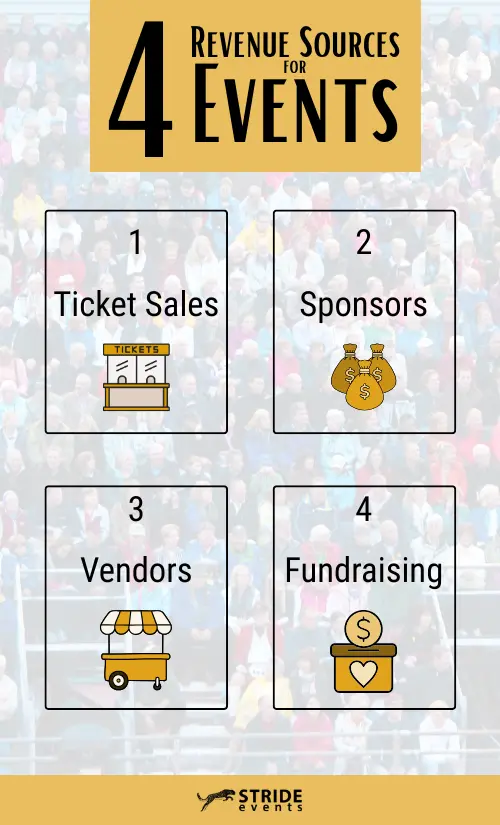
Once you understand what it will take to put on your event, you need to start gathering funding. Create multiple revenue streams for your event to maximize your success:
- Ticket & Registration Revenue – People coming to your event will pay an entry fee for their experience. Keep your pricing competitive and affordable. This revenue stream is about volume. The more people come, the more revenue you have. Open your ticket sales and registration as soon as possible so that you can start to get revenue flowing to cover expenses.
- Sponsorships – Local organizations and businesses look for opportunities to connect with their audiences to boost their brand and sales. Put together a sponsor program and reach out to local businesses to get their support. It’s a win-win opportunity because sponsors benefit from marketing and sales while you get meaningful financial support for your event.
- Vendors – Local artisans, restaurants, and food trucks often attend events for sales opportunities. Some of your sponsors may also be interested in having a vendor booth at your event. Having popular sponsors and vendors at your event will help draw a crowd. You can charge vendors to be at your event, too.
- Fundraising & Donors – Charities and nonprofit organizations can also boost their revenue through donors. You can even organize a fundraising competition as part of your event to gather even more support.
If you’re just starting up, maybe you have some personal funds that you can invest in your event or you can even look into a loan.
7. Get Permits
Any event is going to need to get permits. And, your local officials really value advance notice. You need to start reaching out about permits at least six months in advance, though earlier is better.
You may need a mass gathering permit even if your event is on private property. To get this permit, you’ll need to cover health and safety details of your event. If your event is on public property, you’ll also need a special events permit, too. If your event venue is on private property that you do not own, you’ll need to have documentation that you have permission to use that property.
Who you need to contact about permits varies widely depending on the city. A good place to start is the parks and recreation department. But, you may also try other city officials, the health department, the police department, or the fire department.

8. Recruit Volunteers
Events run on volunteers. You need help with setup, scanning, and cleanup. You may even want people to staff an information desk.
Include an assessment of your volunteer needs in your event plan. Then, you can create volunteer jobs and shifts to add to an online sign up form. Stride Events offers an integrated, free volunteer sign up form and volunteer management tools through Come Volunteer. It’s quick and easy to set up.
Determine what you’ll offer volunteers for their help – free tickets, discounted swag, a volunteer party, etc. Then, start recruiting volunteers.
Organizing an event takes a lot of work and coordination. And, with careful planning, effective marketing and sales, and the right software, you can pull off a successful event.