How to Create a Loyalty Program for Your Event
A loyalty program helps you create an audience that keeps coming back. Of course, you have to deliver a great experience each time your attendees come, too.
Attracting new attendees and participants costs more than keeping the audience you have. You’ve already done the marketing to get them to your event once, you just need to keep them coming back.
Smart event organizers are always looking for new audiences and keeping their loyal audience. We’ll focus on how to create a loyalty program that works for your event:
- Understand operational and marketing costs.
- Consider the lifetime revenue value of your attendees.
- Define loyalty and determine discount amounts.
- Advertise your loyalty program.
- Send promo codes to your loyal fans.
1. Understand Operational & Marketing Costs
Before you offer discounts, you need to review your operational and marketing costs. Identify all of your operating costs like:
- Building rental
- Cups
- Wristbands
- Permits
- Costumes
- Tents
- Tables
If you operate events throughout the year, consider looking at your expenses over a year instead of using one event or running unique analysis for each event you do.
Next, review all of your marketing expenses. Consider what you spend on
- Digital advertising
- Expos and tradeshows
- Print media
Again, look at these numbers over the course of a year if you organize multiple events.
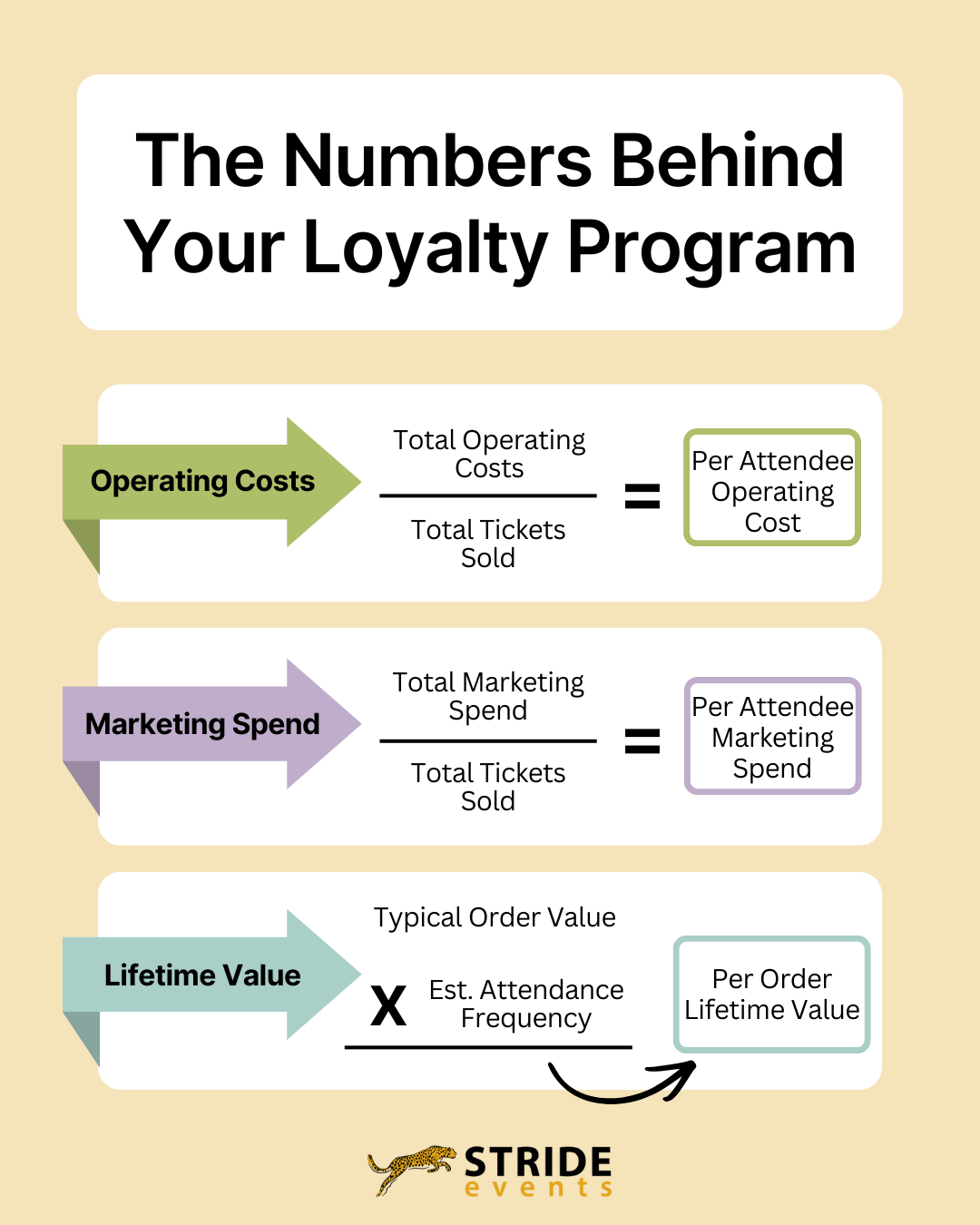
Once you have your total operating costs and your total marketing costs, divide these numbers by your total number of tickets sold.
Now, you know how much your operations cost per ticket based on actual data. The per-ticket cost may change over time as your event grows and you start selling more tickets.
You’ll also know how much you spent on marketing per ticket. This number is your acquisition cost. It’s a good reference for the most you want to discount per ticket in your loyalty program.
2. Consider the Lifetime Revenue Value of Your Attendees
Returning attendees help you drive revenue year after year. Think about how much future revenue you have each year if your past attendees return.
Not every attendee will return next year – things come up in people’s lives and other reasons. If you don’t already have retention data from running your event for a few years, it’s hard to estimate the percentage of people you’ll get to return.
If you don’t have retention data, take a conservative estimate of 5-10 percent of your audience last year. Otherwise, reference your retention data.
Calculate how much revenue you’d generate over the next 2 years and next 5 years if your most loyal attendees keep coming back each year. Calculate this by ticket type if you have different pricing tiers for your events. Alternatively, you can look at the average order value for your loyal attendees for an overall estimate.
With these numbers, you have a sense of future revenue you can generate if your attendees keep returning.
3. Define Loyalty & Determine Discount Amounts
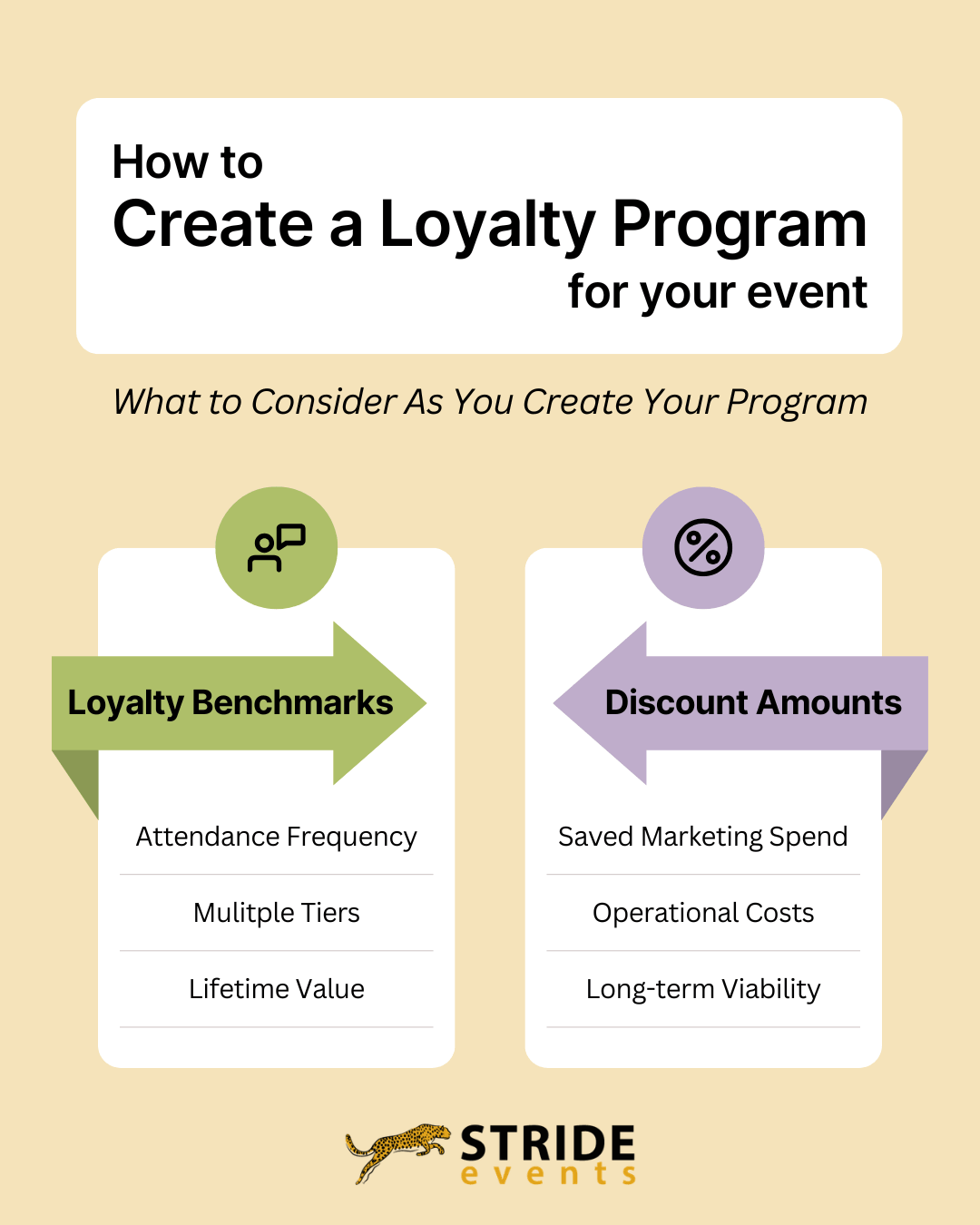
Once you understand your costs and the potential revenue your loyal fans represent, you can assess how many times you need people to attend to demonstrate loyalty and determine how much of a discount you’d like to offer.
Loyalty
Reviewing your numbers, determine the number of years that results in a loyalty discount. Maybe you start offering a discount at one year and a higher discount at 5 years. Or, you may start your loyalty discount after two years.
Discount
As you’re setting your discount amounts, think about the marketing dollars you’re saving by keeping attendees returning and what you spend per attendee on operations. Find a good balance between the two.
Remember that you don’t want to make changes to your loyalty program later, so be sure that you’re comfortable with the number of years and discount levels you offer.
Loyalty programs are one type of discount strategy that can help you sell more tickets.
4. Advertise Your Loyalty Program
As soon as you’ve created your loyalty program, start advertising it. You should advertise it even if you don’t have anyone who qualifies yet.
When people know about your loyalty program, it affects their purchase decisions and gives them something to work towards. It also helps generate more excitement and enthusiasm around your events.
5. Send Promo Codes to Your Loyal Fans
As your fans qualify for loyalty discounts and you open ticket sales to your events, create and send promo codes to your loyal audience.
With Stride Events, this task is easy. Our system autogenerates unique promo codes for each ticket buyer who qualifies. You don’t have to manually track who qualifies or create tons of promo codes yourself. Here’s how:
- Open the Loyalty Program feature, then set up the discount amount and number of items to discount.
- Next, choose your recipients based on the number of years they’ve purchased tickets and which event years qualify.
- Lastly, update your email subject line and message before sending.
Offering a loyalty program helps you build a loyal following and thank your most loyal fans for supporting your event.